
Choosing a hot water system should be a practical decision.
How much hot water does the household need? What will heat it efficiently? Will it work with solar? Can it be installed in the right place? Will it last?
The problem is that hot water systems are rarely chosen calmly. Most people only think about hot water when the old system fails. By then, the decision is urgent. No hot showers. No time to compare properly. No great interest in reading specifications. Just a strong need to get hot water back.
That is how households end up with the wrong system. The right system is not always the cheapest quote, the biggest rebate, or the tank size that happens to be available on the day. It needs to suit the home, the household, the available space, the climate, the way hot water is used, and how the household wants to manage energy in future.
Start with the Home, Not the Brochure
A hot water system has two main jobs.
- It needs to heat water efficiently, and
- It needs to store enough hot water for the household to use when it is needed.
The number of people in the home matters, but it is not the whole answer. A small household with short showers and efficient showerheads will use hot water very differently from a family with back-to-back showers, sport uniforms, guests, baths and someone who treats the shower as a thinking room.
Before choosing a system, look at the real pattern of use:
- How many people live in the home?
- How many bedrooms and bathrooms are there?
- Do people shower one after another?
- Are the showers long or short?
- Are there baths or spa baths?
- Does the washing machine or dishwasher use hot water from the hot water service?
- Is there rooftop solar?
- When is most hot water used?
Sizing is not a simple “one person equals one tank size” calculation. That can be a starting point, but it is not enough to make a good decision.
Size for the House as Well as the Household
Hot water systems usually stay with the property for many years.
The people living in the home today may not be the people using the system in five or ten years. Children grow. Guests stay. Tenants change. Homes are sold. Household routines shift.
That does not mean every home needs the biggest tank available. A larger system costs more, takes up more space and may store more hot water than the household normally uses. But the system should not be sized so tightly that it only works for the exact household pattern on the day it is installed.
The aim is not to buy the biggest tank. The aim is to buy enough tank.
A Practical Guide to Tank Size
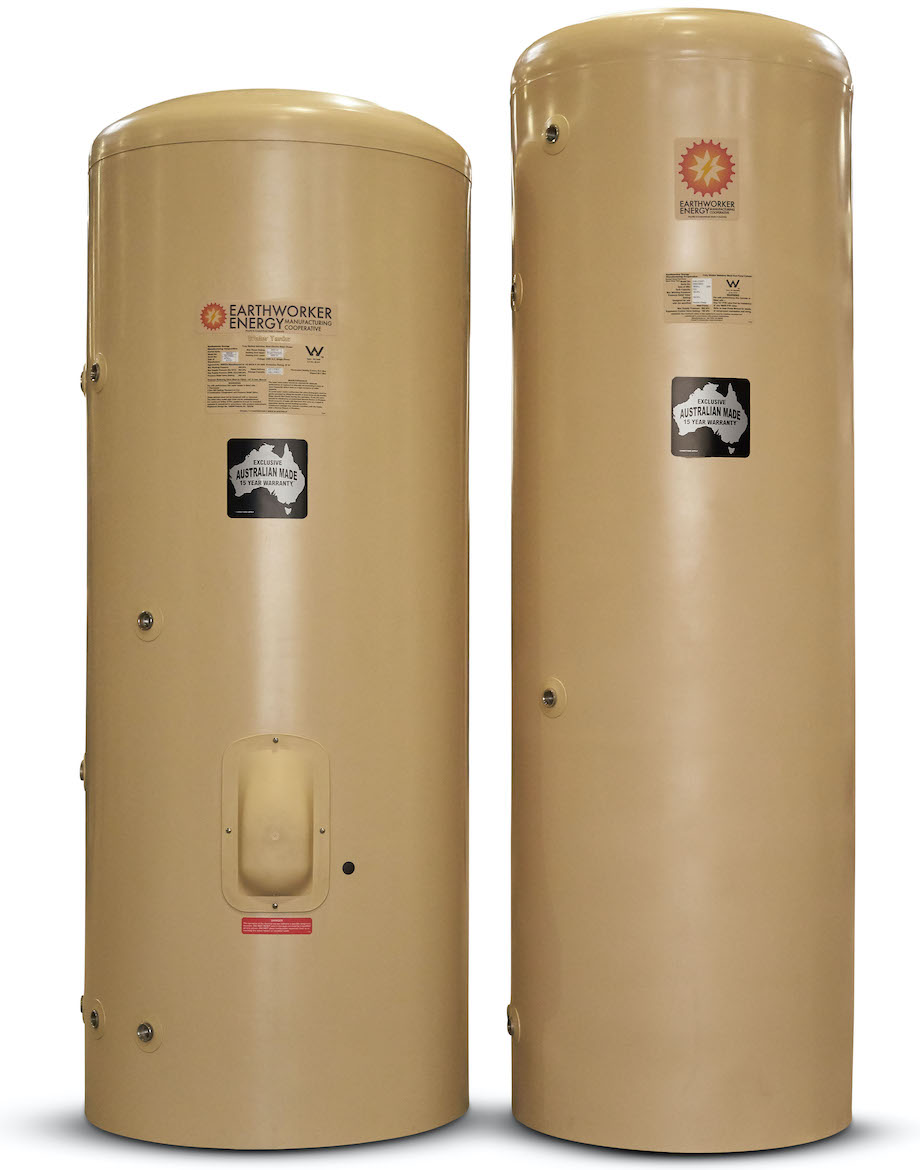
For many homes, the decision will sit around 250L or 315L.
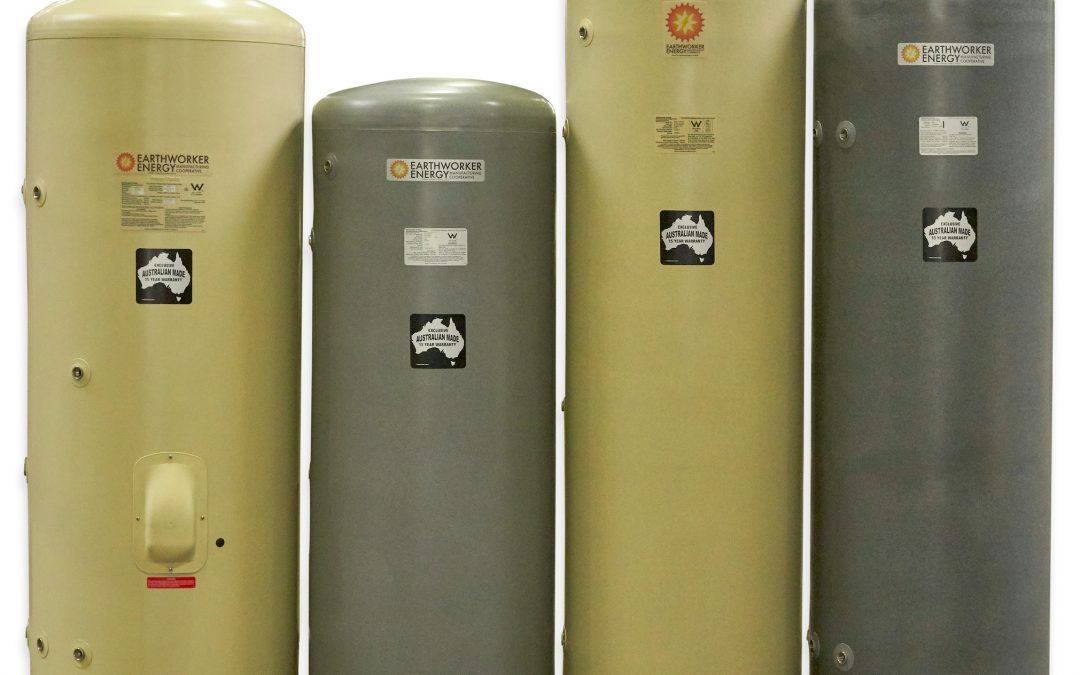
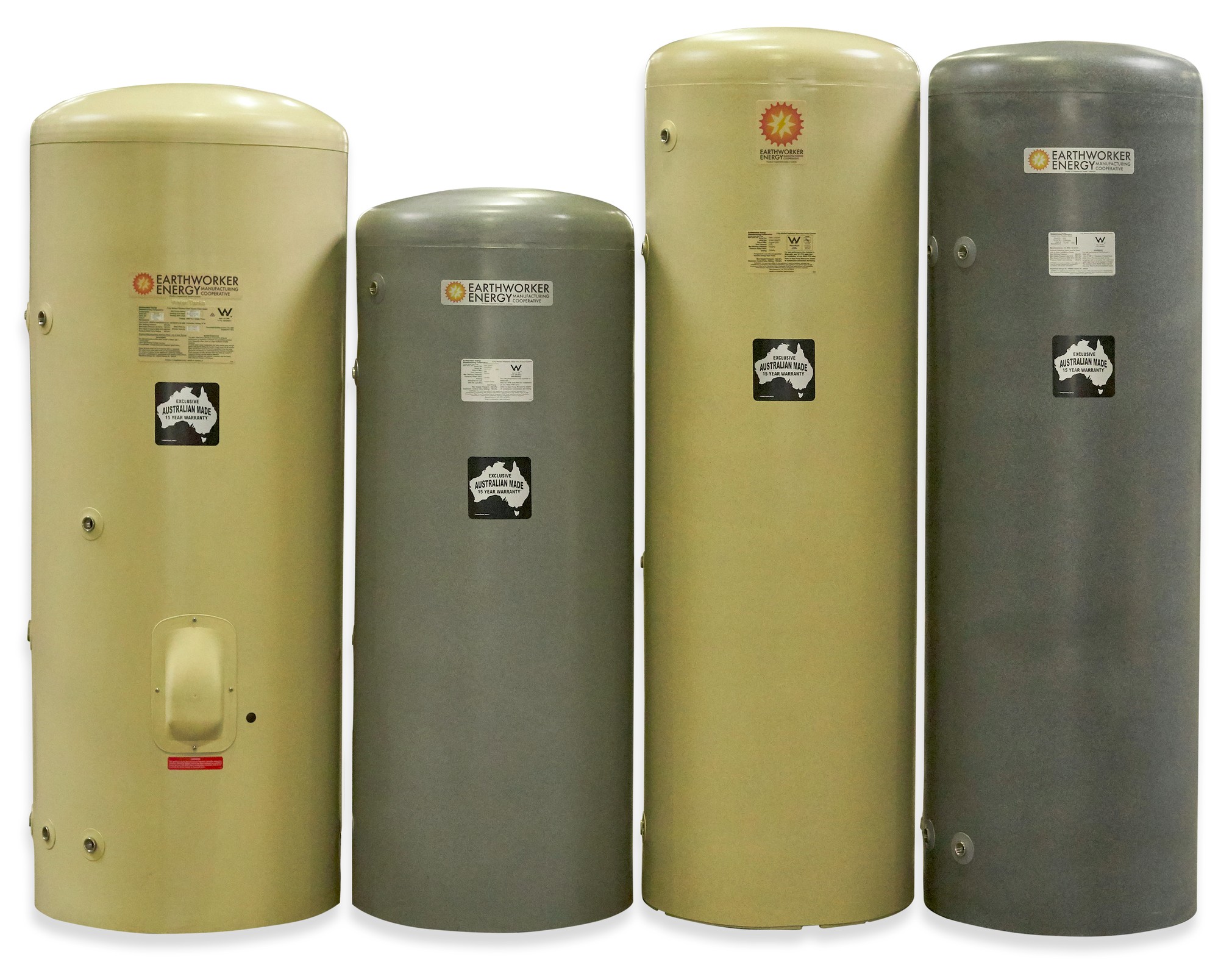
Earthworker Energy manufactures premium stainless steel hot water tanks in 250L and 315L sizes. A 160L and 420L tank may be available as a special order, with lead times applying.
250L: may suit smaller households, water-conscious homes or properties with moderate hot water use.
315L: is often the more comfortable option for family homes, especially where several people use hot water close together.
These are guides, not guarantees. The right size still depends on the home, the household, the system selected and how the hot water will be used.
The Problem with Going Too Small
A heat pump hot water system is efficient, but it still needs time to heat water. If the tank is too small, the household may run short during peak use. That is usually noticed in the shower, which is not the ideal place to discover a sizing problem. Undersizing can also increase the use of boost functions where they are available. Boost can help in the moment, but regular reliance on boost may reduce the running-cost benefit of the system.
This is especially important for homes with rooftop solar. If the plan is to run the heat pump during the day while the solar panels are producing electricity, the tank needs enough stored hot water to carry the household through the evening and morning. In that situation, a slightly larger tank may make sense, not because the household uses more hot water overall, but because the heating window is being managed more deliberately.
The Problem with Going Too Large
Oversizing is not ideal either. A larger tank may provide more comfort, but it will usually cost more upfront and take up more space. If it is much larger than needed, the household may be paying for capacity it rarely uses.
Extra capacity can make sense for larger households, multiple bathrooms, long showers, regular guests, baths, spa baths or hot water-connected appliances. But “just go bigger” is not always good advice. A well-sized system should provide enough hot water without adding unnecessary cost.
Heat Pump or Standard Electric Storage?
For many homes, a heat pump hot water system will be the better long-term choice. A standard electric storage system uses an electric element to heat water directly. A heat pump uses electricity to move heat from the surrounding air into the water. That is why a heat pump can use far less electricity to do the same job.
There are some situations where standard electric storage may deserve consideration. If a household has access to very cheap or free electricity during the middle of the day, and the tank can be reliably timed to heat during that period, standard electric storage may be a reasonable option. It is simple, familiar and usually cheaper to buy upfront. But it is still less efficient.
The real question is not simply heat pump or electric storage. The real question is how the household will use hot water, what tariff it will be on, whether the system can be timed properly, and what it will cost to own over its life.
Choose the System, Not Just the Tank
Tank size matters, but it is only one part of the decision. The heat pump unit matters too. Systems vary in efficiency, recovery rate, noise, controller options, cold-weather performance, warranty and upfront price. Earthworker Energy supplies different hot water options for different homes and budgets.
Reclaim CO₂ Heat Pump System: the premium pathway, designed for high efficiency, quiet operation and strong cold-climate performance.
NEO Heat Pump System: a more affordable heat pump option for households wanting efficient electric hot water with a lower upfront cost.
Both systems are built around an Australian-made Earthworker stainless steel tank. That matters because the tank stores hot water every day, year after year. Earthworker tanks are made in Morwell from corrosion-resistant marine-grade stainless steel, finished with a recycled polymer outer casing and backed by a 15-year warranty.
Integrated or Split System?
Heat pump hot water systems usually come in two forms.
- An integrated system has the heat pump and tank together in one unit. This can be compact and straightforward to install.
- A split system has the heat pump unit separate from the storage tank. This can provide more flexibility with placement, access, pipework, noise and site layout.
There is no single right answer for every property. The best arrangement depends on where the old system is located, where the new system can sensibly go, how much space is available, where bedrooms and neighbours are, and how the plumbing and electrical work can be managed.
Solar Changes the Decision
If the home has rooftop solar, the hot water system should be chosen with that in mind.
A heat pump can often be set to run during the day, when the solar panels are producing electricity. Instead of exporting excess solar for a low feed-in tariff, the household can use that power to heat water and store it for later.
In that sense, the hot water tank becomes a simple form of energy storage. For this to work well, the system needs to be sized properly and the controls need to support the heating schedule. The tank must hold enough hot water to get the household through the evening and morning after heating during the day.
Climate and Location Matter
Heat pumps draw heat from the air, so local climate matters. Some heat pumps perform better than others in colder conditions. In cooler parts of Victoria and other cold regions, this should be checked before choosing a system.
The physical location also matters. A heat pump has a fan and compressor, so noise should be considered, especially near bedrooms or neighbours. Pipe runs should be kept sensible where possible. Exposed pipework should be insulated. The unit needs suitable access, drainage and clearance.
These details are not glamorous, but they affect how well the system works once it is installed.
Questions to Ask Before Choosing
Before choosing a hot water system, ask the practical questions.
- How many people live in the home now?
- Could that change?
- How many bedrooms and bathrooms are there?
- Are there long showers or back-to-back showers?
- Are there baths, spa baths or regular guests?
- Does the home have rooftop solar?
- Do you want the system to run during the day?
- Is the home in a colder climate?
- Where can the tank and heat pump be installed?
- Will the unit be close to bedrooms or neighbours?
- Is the tank built to last?
- What does the warranty cover?
- Is there a real business behind the product?
These questions are simple. They are also the questions most likely to be skipped when the old system has failed and the household just wants hot water back.
Make a Better Hot Water Decision
Choosing the right hot water system is not about guessing the tank size or chasing the cheapest quote.
It is about choosing a system that can meet the household’s real hot water needs, reduce running costs, work well with solar where available, and keep doing its job for years.
For some homes, that will mean a premium Reclaim CO₂ heat pump system. For others, the more affordable NEO heat pump pathway may be the right fit. Some homes will be well suited to 250L. Others will need 315L. The right answer depends on the home.
Earthworker Energy manufactures premium stainless steel hot water tanks in Morwell and supplies hot water systems for different households, budgets and installation needs.
Hot water is used every day. It is worth getting right.